
January 2026
If you smoke, you probably already know it does serious damage to your health. Smoking is the top cause of preventable disease, disability, and death in the United States, according to the Centers for Disease Control and Prevention (CDC). It’s also a leading cause of cancer, heart disease, and lung disease.
What you may not know is that once you quit smoking, it doesn’t take years for your body to heal and recover. Quitting smoking has many immediate benefits that you can feel — and doctors can see — in as little as 20 minutes after your last puff of tobacco.
Quitting smoking benefits timeline
Here’s how your body will react and when you can expect it to happen, according to the CDC, American Heart Association (AHA), and American Cancer Society (ACS):
- Within 20 minutes: Your heart rate and blood pressure drop.
- After 24 hours: Nicotine levels in your blood drop to zero. Nicotine is the addictive substance found in cigarettes and tobacco products.
- After a few days: Carbon monoxide levels in your blood normalize.
- After two weeks: Lung function and blood circulation improves.
- After one to 12 months: Coughing and shortness of breath start to decrease and improve. You begin to breathe clearer and deeper. Instead of a hacking cough, you can now have productive coughing. This helps clear your lungs and reduces your risk of infection.
- After one to two years: Your risk of heart attacks drops dramatically.
- After three to six years: Your added risk of coronary heart disease drops by 50% compared to smokers.
- After five to 10 years: Your risk of mouth, throat, or voice box
(larynx) cancer drops by 50%. Your risk of stroke decreases. - After 10 years: Your risk of lung cancer drops by 50% compared to someone who still smokes. Your risk of cancer of the bladder, esophagus, and kidney also drops.
- After 15 years: Your risk of coronary heart disease is close to that of someone who does not use cigarettes or other tobacco products.
- After 20 years: Your risk of cancers of the mouth, throat, voice box (larynx), and pancreas drops to close to that of someone who does not smoke or use other tobacco products. Your added risk of cervical cancer drops by 50%.
The longer you stay smoke-free, the bigger the health benefits to you. Quitting smoking can prevent 12 types of cancer and may add as much as 10 years to your life compared to people who still smoke, according to the ACS.
While quitting at any age helps extend your life, the younger you are when you quit, the greater the benefit: Quitting before age 40 lowers your risk of dying from smoking-related disease by about 90%.
Immediate lifestyle benefits of quitting smoking
When you quit smoking, you’ll quickly realize how much smoking impacted your quality of life. You may also notice these lifestyle benefits right away:
- Your breath, clothes, hair, car, and home will smell better.
- Yellow stains on your teeth and fingernails will start to fade.
- Your sense of smell and taste will return to normal. When you eat, your food will taste better.
- You feel less out of breath doing everyday activities, such as climbing the stairs.
- You may save hundreds or thousands of dollars each year. SmokeFree.gov has a savings calculator to see how much you can save.
Quitting smoking can take time. The sooner you start, the sooner you can reap the health, lifestyle, and financial benefits. Smoking cessation programs can help. SmokeFree.gov offers smoking cessation programs and resources to help you get started. In addition, consider reaching out to your local pharmacist or doctor for personalized support and guidance tailored to your needs.
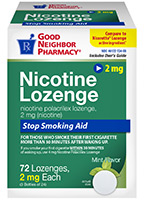
Good Neighbor Pharmacy Nicotine 2mg Coated Mint Lozenges 72ct
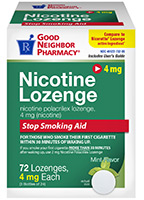
Good Neighbor Pharmacy Nicotine 4mg Coated Mint Lozenges 72ct
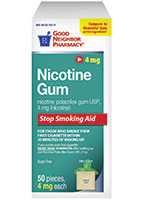
Good Neighbor Pharmacy Nicotine 4mg Uncoated Mint Gum 50ct