

November 2025
No one likes to spend more on healthcare than they need to. One way to reduce your healthcare costs is with tax-advantaged healthcare savings accounts — known as HSAs and FSAs. These accounts can help you save on qualified out-of-pocket medical expenses and products.
Learn more about what HSAs and FSAs are, how they work, and which expenses you can pay for using each of these accounts.
What are HSAs?
HSA stands for Health Savings Account. You are eligible for one of these accounts if you enroll in a high-deductible health plan (HDHP). What qualifies as an HDHP changes every year. The lowest deductible that qualifies a plan as an HDHP in 2025 is $1,650 for an individual and $3,300 for a family (spouse and/or children). For 2026, those minimum deductibles rise to $1,700 for an individual and $3,400 for a family.
In addition, for 2025, the HDHP must have an out-of-pocket maximum (including the annual deductible) of no more than $8,300 for an individual and $16,600 for a family. For 2026, those numbers rise to $8,500 and $17,000, respectively.
You are eligible whether you buy your insurance as an individual (such as through state healthcare exchanges) or have an employer-sponsored plan.
Benefits of HSAs
According to IRS Publication, HSAs offer several benefits, includin 969g:
- You won’t owe federal income tax on contributions to an HSA. This is applicable whether contributions come from you or your employer and whether or not you itemize your deductions.
- Contributions roll over from year to year. They can stay in your account until you use them. You don’t have to use the money by the end of the fiscal year.
- Your HSA withdrawals are tax-free if used for qualified healthcare expenses.
- The interest or other earnings in an HSA are tax-free if you use the money for qualified healthcare expenses.
- HSAs are portable. Even if you leave your employer or the workforce, you can still keep your HSA.
Opening and funding an HSA
You can often open one of these special savings accounts through your employer-sponsored plan. According to Bankrate.com, several financial institutions, including consumer banks, credit unions, and investment firms, also offer HSA accounts. Depending on where you open an HSA, you may have to pay monthly maintenance fees.
Contribution limits are adjusted annually for inflation. HSA contribution limits for 2025 are $4,300 for individuals and $8,550 for a family. For 2026, the contribution limits will rise to $4,400 and $8,750, respectively.
Those 55 and older who are not enrolled in Medicare can contribute an additional $1,000 as a catch-up contribution. If both you and your spouse qualify for catch-up contributions, talk with your HR department (if it’s through an employer) or your accountant (if you’re selfemployed), because you will need to contribute to separate HSA accounts.
You can change your contribution amount at any time.
Important notes about HSAs
If you use HSA money for non-qualified expenses (beauty products, for example), you will have to pay the IRS a 20% penalty plus taxes on withdrawal. (You can use the money for non-qualified expenses without the 20% penalty once you turn 65, but you’ll still need to pay income tax on the money.)
Some HSA accounts require you to submit receipts to prove that you used the money for qualified medical expenses. Even if your HSA doesn’t require this, you should keep all receipts for up to three years in case of an IRS audit.
You can also use HSAs as an investment tool. According to Bankrate.com, you can use an HSA to invest in stocks, bonds, and other financial instruments. Earnings are tax-free.
Although you won’t owe federal income tax on HSA contributions, you must report HSAs on your yearly income tax return.
What are FSAs?
FSA stands for Flexible Spending Account. Unlike HSAs, which are individual plans, FSAs are employer-established benefit plans, which means you can get one of these special healthcare spending accounts only through an employer.
FSAs allow employees to get reimbursed, or paid back, for qualified medical expenses.
You can’t use FSAs for the following:
- Health insurance premiums
- Long-term care coverage or expenses
- Amounts that are covered under another health plan
Funding an FSA
To fund an FSA, most people choose a voluntary salary reduction, where a portion of their salary automatically goes into an FSA. This is often called a salary-reduction agreement. Your contribution amount is set during open enrollment and can’t be changed.
Your employer may also contribute to your FSA. Some employers may match up to a certain dollar amount of your contribution.
The upper limit you can contribute to an FSA changes each year. For 2025, the limit is $3,300 for an individual, $5,000 per household ($2,500 if married but filing separately).
Benefits of FSAs
FSAs offer several benefits:
- Your employer’s contributions can be excluded from your gross income.
- Reimbursements are tax-free if you pay for qualified medical expenses for you and qualifying family members.
- You can use an FSA to pay for qualified medical expenses even if you haven’t funded the account yet. That’s because your employer effectively “fronts” you the amount you elect for the plan year — and then deducts a portion of that amount from every paycheck.
- You don’t pay federal income tax, social security, or Medicare on the money that you or your employer contributes to the FSA.
Important notes about FSAs
You typically need to use money in your FSA by the end of the year you contributed for. But your employer is allowed (though not obligated) to allow you to either: (1) use the remaining money within a 2.5-month “grace period” at the beginning of the following year; or (2) roll over up to a certain dollar amount to the next year, as long as you re-enroll in an FSA. (For 2025 contributions, you can roll over unused funds up to a maximum of $660 into 2026.)
FSAs aren’t portable — they don’t move with you if you leave your job. Moreover, unlike HSAs, you don’t need to report FSAs on your yearly income tax return.
What are HSAs and FSAs used for?
You can only use the money in an HSA or FSA for qualified out-of-pocket medical expenses. You can’t use these accounts to pay for your health insurance premium (the amount your health insurance plan charges you each month).
Qualified medical expenses include:
- Doctor’s office visits
- Co-pays for medical tests and procedures, prescription medication
- Ambulance services; eyeglasses
- Contact lenses and items you need for your lenses (such as cleaning solutions)
- Pregnancy tests
- Durable medical equipment, such as crutches and wheelchairs
- Certain vision and dental care procedures
- Many over-the-counter (OTC) medications and products (ask your pharmacist if you have any questions about which OTC items are FSA-eligible)
You can find the full list of current qualifying medical expenses on the IRS website.
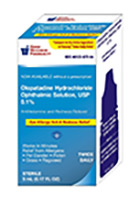
Good Neighbor Pharmacy Olopatadine 0.1% Eye Itch Relief 5ml
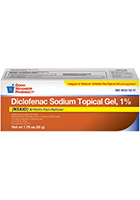
Good Neighbor Pharmacy Diclofenac Sodium Topical Gel, 1%
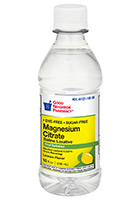
Good Neighbor Pharmacy Magnesium Citrate Laxative Lemon 10oz
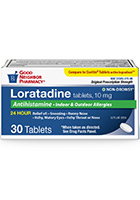
Good Neighbor Pharmacy Loratadine Tablets, 10 mg, 24 hour
How to learn more about HSAs and FSAs
There are other specific rules about HSAs and FSAs. You can read more about HSAs, FSAs, and other tax-favored health plans — those you qualify for and those that make sense according to your financial situation — . If on this IRS page you have any tax-advantaged health accounts through an employer, you can also reach out to your HR department for more info.